So, at work we have this project called ACES which is a package based software implementation. However, the client decided to hack the crap out of the package to shoehorn it into their business. It has been going on for 7 years. We haven't implemented yet and we are on Work Pack 23 - that's 23 software releases of modifications to the base package just in the last two years. Looks possible we will go live with it next month such as it is. In honor of this ridiculous endeavor, I started on a recipe for an Irish Red Ale I called ACES Anniversary Ale. Each batch took on another work pack number, starting with WP-01. There really isn't any anniversary, but I figured I was brewing it for the go live date.
The first batch had a bit too much crystal malts. I was shooting for an Imperial Irish Ale. Although you could see the reddish tint when held up to a bright light, it appeared fairly dark brown. I had dry hopped it with a quarter ounce each of Simcoe and Williamette pellets, so it had a nice bitter finish, but not too bad. It came out pretty malty, and the ABV wasn't as high as expected. I looked at the specs for the Irish Ale yeast and realized it only attenuates to 70%, so it left behind a lot of sugar and resulted in 5.6% ABV instead of 8%.
WP-02 was brewed about a month later and I reduced some of the crystal, but kept the flaked barley and Carared malt. Still came out a bit dark, but the red was showing better. ABV came out about the same.
WP-03 was very different, took out all the Munich and extra crystal, exc for the Carared. I screwed up the mash with too high of temperature of strike water and didn't detect it soon enough. I was doing a single infusion mash and the temperature gradients in the tun were pretty wide. I only managed to get 3.5% out of it. So as a hail mary, I threw in a bottle of Jameson's to get it over 5%. I skipped the dry hopping this time. I popped a bottle after a week and thought that if it didn't get better, I'd dump the lot.
After another week and a half, it really matured. Over two weeks after bottling it was actually damn good enough bring it in to work to distribute. I called it WP-03 Hot Fix as a tribute to the Jameson's fix.
Sunday, August 10, 2014
Saturday, April 19, 2014
Full steam ahead
I kicked off this round of brewing with a porter....my son loves BJs Porter, but I decided on a Baltic Porter heavily laced with anice that I happened to have on hand.
Stupid me..at the last minute during setting up the carbonation, I decided to deviate from my carefully crafted recipe and add more honey. Totally forgot what it would do to the carbonation...was hoping for more honey flavor...rookie mistake. Ended up with a bunch of bottle bombs.But once it was allowed to settle down was pretty awesome porter...if you like anise.
So next was a stout...another of my son's favorites. Brewed a great stout, and decided to add hickory chips soaked in a bottle of Bourbon to the wort. Ok for me, but ended up at 12.6% and a kick ass brew. I liked it, so did my son. But gave a bunch of it out and most people weren't prepared. That's Bailey on the label in a Tennessee hillbilly's hat. Had one like that when I was a kid. My mother called it a pea-picker's hat.
One guy who was a former drunk, really liked it . :-P Maybe I should be more careful about screening those I give samples to. Should probably create a questionnaire and see if they are qualified to drink this stuff. If you don't like Bourbon, coffee, roasted flavors, you won't like it. But Steve, at Vegas Home Brew thought I was on to something and told me to save some till August to let it mellow a bit. That's going to take some willpower. One of my Untappd friends put in a request for a couple bottles.
Just started an Imperial Red Ale today. Calling it ACES Anniversary Ale for a project going live next month at work called ACES. Everything seemed to go to plan so we will see where we end up next month. But it's off to a good start.
And now the next day:
Love that sound! Seems like a miracle that those tiny yeast cells can do that.
Saturday, August 24, 2013
Slowly getting back to it
Been away from brewing anything since that killer stout last winter. A bit chastened by a failed dopplebock, I have spent a few months going through all my recipes and converting them to 5 gallon recipes and fine tuning the hops and grain bill calculations.
I also just built a yeast stir plate and replumbed my mash tun cooler. I only bought one part for the stir plate - a potentiometer to slow the fan down. The parts used were a wooden cigar box from a friend, an old PC provided a fan, hard drive magnets, and an old cell phone..the power cord with transformer. Throw in some gorilla glue, a few wire nuts and odd screws and slap it all together. Here it is with the fan mounted to the lid before I added the potentiometer to slow it down.
For the mash run I had been using plastic hose clamped onto the existing cooler spigot but it wasn't sturdy enough. Tore that spigot out and replaced it with a nipple, two washers and two bushings and reattached the valve to the outside bushing.
I also cut a piece of half inch tubing and pushed it onto the special tube fitting and clamped it on the braid I had before from the hose I had taken apart.
Next I want to pick up an aquarium aerator and a submersible pump to use in an ice bath to feed my wort chiller. The hose water here is too warm to chill the wort quickly or low enough.
I also just built a yeast stir plate and replumbed my mash tun cooler. I only bought one part for the stir plate - a potentiometer to slow the fan down. The parts used were a wooden cigar box from a friend, an old PC provided a fan, hard drive magnets, and an old cell phone..the power cord with transformer. Throw in some gorilla glue, a few wire nuts and odd screws and slap it all together. Here it is with the fan mounted to the lid before I added the potentiometer to slow it down.
For the mash run I had been using plastic hose clamped onto the existing cooler spigot but it wasn't sturdy enough. Tore that spigot out and replaced it with a nipple, two washers and two bushings and reattached the valve to the outside bushing.
Next I want to pick up an aquarium aerator and a submersible pump to use in an ice bath to feed my wort chiller. The hose water here is too warm to chill the wort quickly or low enough.
Monday, February 25, 2013
A late Christmas gift
We don't get to see one of our besties now that she is in Arizona and we are in Vegas. She came up to visit this weekend and we finally got to exchange Christmas presents. She was happy that I'd taken up homebrewing so she could find something more creative to get me. As a result, she took her first excursion into a homebrew store in Phoenix (there are 5 of them down there). It was pretty daunting with all the food buckets, carboys, hardware, grains, etc. So the proprietor asked her a few questions of which she could only answer that he's been homebrewing for a year or so and had no idea how. All she did remember was that I do like dark malty brews. The owner took her over to the kit rack and showed her what sounded like a very sizeable collection of kits. Thankfully, he picked out the Crosby & Baker True Brew Oaked Imperial Stout. I'd been thinking about brewing a stout and the weather is just trending right in the garage for fermentation.
I was in the midst of reading Randy Mosher's "Tasting Beer" and was on the Belgian section. I remembered reading about Chimay and was surprised to see an abbey-brewed ale on the menu. Obviously I should have had these in reverse order. The Chimay was overpowered by the residual stout and the jambalaya I had. It was a nice brew, but I really could not taste its nuances even with cleansing my palate with water. It certainly was not very hoppy, but did seem a bit citrusy.
The kit is very complete with two kinds of LME - hopped and unhopped dark, 2 kinds of DME - light and dark, crystal, chocolate and roasted malt grains, Nugget hops, Fermentis US-05 American Dry Ale yeast, oak powder, priming sugar and even a grain bag.
We spent dinner at the Yardhouse and there's always a great selection. This time there was Young's Double Chocolate Stout on hand. All I can say is OMG. The head on this brew is so amazing, I've never tasted anything like it. It is as thick as a chocolate milk shake. The brew has a very distinct chocolate flavor and the aroma really kicks in once you have warmed it up and drained about half the glass. The head remains long after the brew is gone.
I was in the midst of reading Randy Mosher's "Tasting Beer" and was on the Belgian section. I remembered reading about Chimay and was surprised to see an abbey-brewed ale on the menu. Obviously I should have had these in reverse order. The Chimay was overpowered by the residual stout and the jambalaya I had. It was a nice brew, but I really could not taste its nuances even with cleansing my palate with water. It certainly was not very hoppy, but did seem a bit citrusy.
The next night we went to Cheesecake Factory. A fairly uninspired beer menu, especially in this case with their proximity to local breweries. One of the few redeeming entries was the New Belgium Fat Tire red ale. You can see the incredible color and lacing. It stood up well to whatever it was I ate, oh yeah - chicken pasta with marinara sauce. Very much a sessionable brew, even at over 5%, quite malty with subdued hop flavors...just enough bittering hops for balance.
All in all - a pretty great weekend for beer.
Friday, January 25, 2013
Dopplebockery
Winter in Vegas and Gordon Biersch put out an amazing Winterbock. We all liked it so much we ate dinner there several weeks in a row, bought a growler full and refilled it. So when for Christmas, my brewery was upgraded to 5 gallon capacity - new grain mill, mash tun, lautering cooler, wort chiller, extra food bucket and a few odds and ends I picked up after, I knew what I had to do.
Combine those two events together and I decided to make a dopplebock. Not sure I was thinking straight, because if I'd remembered the length of time and hassle it took to lager a Munich Dunkel last year, I might have thought better of it.
Did a bit of digging through beerrecipes.org, beersmithrecipes.com, Homebrew Favorites, "Designing Great Beers", and "Radical Brewing" and put together a powerful triple decoction brew with almost a 12% ABV. That's actually when I decided to build the cooler lautering tun. The mash tun just wouldn't hold enough grain and water to get up that high.
I sanitized everything in the tub with bleach. A lot cheaper than Starsan and with a good rinsing, I've never had trouble with it. Did manage to pull my back out taking the mash tun out of the bathtub full of water to take out to the burner. Was fine the next day though.
My whole grain bill came out to 16.5 pounds of grain - Amber malt, malted wheat, Briess malt, 2 kinds of crystal malt, chocolate malt, black patent malt, Vienna and Munich malts. Decoction is pretty tricky and depending on who you listen to, you can really go down a rat hole and waste a bunch of time. The first two decoctions I took, I actually ran the liquid and grain decoction through the remaining temperature rests, which took a couple hours a piece. By the time I added them back to the tun, the temperature in the tun had dropped about 10 degrees, so I ended up back where I started. I then consulted a different source that said to just decoct the grains and boil them and add them back in. Then I started to make some progress and get the whole tun up to the right temperatures after three more decoctions. I spent the whole day doing this to finally get the tun up to the final temperatures. By then it was too late to do anything else, so it sat over night.
It had an awesome smell with all those grains. This was also during a cold snap, so it was barely 30 degrees in the garage. Plus I had to keep the door partially open due to the propane burner running. The vodka I was using for minor sanitation jobs came in handy. The next day I started sparging...and sparging. When I finished, the final gravity was 1.13 and there was plenty of color left in the runnings. I took another batch of sparge water and added it to the grains and let it soak really well, while I started the boil on the main batch. When I resparged the grains I ended up with another 5 gallons at a gravity of 1.03 and still a very good color. Later I added three pounds of Briess CBW Pure Malt Extract Non Diastatic Unhopped Traditional Dark LME to boost the gravity up.
In the main batch, I added Hallertau hops, 3/4ths for bittering and 1/4 for aroma, but this is going to be a malt heavy brew, like it should be. With the weather so cold, the wort chiller worked like a champ and I had the brew cooled down in no time at all. It was still too late to mess with the other batch, so I let it soak overnight. I didn't pitch the yeast, as while the boil was going on, I prepared a starter. This high gravity stuff needed as much yeast as I could get, so just throwing in a tubeful wasn't going to cut it.
That was all I had of Hallertau, but I had a bunch of odds and ends of hops that would work out to about the same bitterness and aroma. Into the second running's boil, I threw Williamette 4.8% .55 oz, Kent goldings 5.7% .4oz, fuggles 4% .2 oz for bittering, and Centennial 8.7% .65 oz for aroma and for something a bit to my taste... half an ounce of anise.
When it came to pitching, I'd followed Palmer's recommendation for creating the starter and pouring off the top portion and only pitching the bottom third. Seemed that both batches really took off slowly...well barely. But I am used to using glass jugs for primaries and not being able to see how the kreusen was developing was frustrating. I picked up another vial of yeast and the LME above. Created another starter with less DME and pitched the whole thing into the primary batch. The LME I put into the second batch not only to increase the gravity, but also to give the yeast something more substantial to dine upon. When I took the lids off both buckets, the kreusen was well developed in both, so I guess I needn't have worried. I pitched the yeast anyway and within a day, the airlock was really popping.
The weather has really been cooperating and the garage has stayed right where I need it in the mid to high 50s. In a few weeks, I'm going to have to chill them down to the high 30s, so I'll be commandeering one of our refrigerators. Should be a good spring, as both of these should be ready, mid April. I think I will have to buy another bucket and brew up a quick stout so I don't die of thirst waiting.
Combine those two events together and I decided to make a dopplebock. Not sure I was thinking straight, because if I'd remembered the length of time and hassle it took to lager a Munich Dunkel last year, I might have thought better of it.
Did a bit of digging through beerrecipes.org, beersmithrecipes.com, Homebrew Favorites, "Designing Great Beers", and "Radical Brewing" and put together a powerful triple decoction brew with almost a 12% ABV. That's actually when I decided to build the cooler lautering tun. The mash tun just wouldn't hold enough grain and water to get up that high.
I used a braided hose for the filter in the bottom of the tun instead of the usual drilled PVC pipe solution. It ended up working very well. I was especially concerned because the mill I'd gotten (on the right below) was a Victoria instead of a roller mill and it tended to really pulverize some of the grain. Very slight difference between not cracking the grain and ending up with dust.I sanitized everything in the tub with bleach. A lot cheaper than Starsan and with a good rinsing, I've never had trouble with it. Did manage to pull my back out taking the mash tun out of the bathtub full of water to take out to the burner. Was fine the next day though.
My whole grain bill came out to 16.5 pounds of grain - Amber malt, malted wheat, Briess malt, 2 kinds of crystal malt, chocolate malt, black patent malt, Vienna and Munich malts. Decoction is pretty tricky and depending on who you listen to, you can really go down a rat hole and waste a bunch of time. The first two decoctions I took, I actually ran the liquid and grain decoction through the remaining temperature rests, which took a couple hours a piece. By the time I added them back to the tun, the temperature in the tun had dropped about 10 degrees, so I ended up back where I started. I then consulted a different source that said to just decoct the grains and boil them and add them back in. Then I started to make some progress and get the whole tun up to the right temperatures after three more decoctions. I spent the whole day doing this to finally get the tun up to the final temperatures. By then it was too late to do anything else, so it sat over night.
It had an awesome smell with all those grains. This was also during a cold snap, so it was barely 30 degrees in the garage. Plus I had to keep the door partially open due to the propane burner running. The vodka I was using for minor sanitation jobs came in handy. The next day I started sparging...and sparging. When I finished, the final gravity was 1.13 and there was plenty of color left in the runnings. I took another batch of sparge water and added it to the grains and let it soak really well, while I started the boil on the main batch. When I resparged the grains I ended up with another 5 gallons at a gravity of 1.03 and still a very good color. Later I added three pounds of Briess CBW Pure Malt Extract Non Diastatic Unhopped Traditional Dark LME to boost the gravity up.
In the main batch, I added Hallertau hops, 3/4ths for bittering and 1/4 for aroma, but this is going to be a malt heavy brew, like it should be. With the weather so cold, the wort chiller worked like a champ and I had the brew cooled down in no time at all. It was still too late to mess with the other batch, so I let it soak overnight. I didn't pitch the yeast, as while the boil was going on, I prepared a starter. This high gravity stuff needed as much yeast as I could get, so just throwing in a tubeful wasn't going to cut it.That was all I had of Hallertau, but I had a bunch of odds and ends of hops that would work out to about the same bitterness and aroma. Into the second running's boil, I threw Williamette 4.8% .55 oz, Kent goldings 5.7% .4oz, fuggles 4% .2 oz for bittering, and Centennial 8.7% .65 oz for aroma and for something a bit to my taste... half an ounce of anise.
When it came to pitching, I'd followed Palmer's recommendation for creating the starter and pouring off the top portion and only pitching the bottom third. Seemed that both batches really took off slowly...well barely. But I am used to using glass jugs for primaries and not being able to see how the kreusen was developing was frustrating. I picked up another vial of yeast and the LME above. Created another starter with less DME and pitched the whole thing into the primary batch. The LME I put into the second batch not only to increase the gravity, but also to give the yeast something more substantial to dine upon. When I took the lids off both buckets, the kreusen was well developed in both, so I guess I needn't have worried. I pitched the yeast anyway and within a day, the airlock was really popping.
The weather has really been cooperating and the garage has stayed right where I need it in the mid to high 50s. In a few weeks, I'm going to have to chill them down to the high 30s, so I'll be commandeering one of our refrigerators. Should be a good spring, as both of these should be ready, mid April. I think I will have to buy another bucket and brew up a quick stout so I don't die of thirst waiting.
Saturday, January 5, 2013
Expansion time
After coming up with some recipes that came out really well, I rue that fact that I was only brewing two gallon batches. Being the impatient type, I couldn't help popping bottles before their time, leaving an insufficient number to really enjoy when they were really ready or to share with the family. So it was time to upgrade to 5 gallon brews. Did a lot of digging around on the web for ready built systems, but the low end Braumeister pot is too small to brew really big, high ABV brews. Blichman's and Ruby Street's set ups are really cool, but pricey.
I happened to see a leftover turkey fryer from Thanksgiving on sale at the grocery store. Seven gallon pot - not quite enough for a big brew, but I decided I could do decoction mashes and use a cooler. We had a couple box coolers in the garage, so I rigged one up with a braided stainless steel hose to use for a lauter tun. I also put a wort chiller and a Victoria hand mill on the Christmas list that finally arrived this week. I already had a 7 gallon fermenting bucket and will pick up a six gallon carboy as a secondary fermenter.
The first recipe I have in mind is a Dopplebock, over 10% ABV. It has been cool enough to ferment the lager yeast out in the garage. 14.5 lbs of grains and 1.25 quarts of water per pound meant that I won't have enough room in the fryer. When I realized that, I decided to retrofit the cooler and do a double decoction mash. I found a great calculator on this site that helped in determining the size of each decoction: http://feathercraft.net/decoction/
Buying the grains and refilling the propane tank next week, so I'll let you know how it goes.
I happened to see a leftover turkey fryer from Thanksgiving on sale at the grocery store. Seven gallon pot - not quite enough for a big brew, but I decided I could do decoction mashes and use a cooler. We had a couple box coolers in the garage, so I rigged one up with a braided stainless steel hose to use for a lauter tun. I also put a wort chiller and a Victoria hand mill on the Christmas list that finally arrived this week. I already had a 7 gallon fermenting bucket and will pick up a six gallon carboy as a secondary fermenter.
The first recipe I have in mind is a Dopplebock, over 10% ABV. It has been cool enough to ferment the lager yeast out in the garage. 14.5 lbs of grains and 1.25 quarts of water per pound meant that I won't have enough room in the fryer. When I realized that, I decided to retrofit the cooler and do a double decoction mash. I found a great calculator on this site that helped in determining the size of each decoction: http://feathercraft.net/decoction/
Buying the grains and refilling the propane tank next week, so I'll let you know how it goes.
Wednesday, October 31, 2012
2012 SNAFU Las Vegas Memorial Competition Part Trois
I thought I'd have to wait until next Friday before I received the score sheets with the details of my entries. The SNAFU club president, Matt, was nice enough to scan and email all the sheets to the entrants. I've given the scores first, then the comments.
Scores:
Saison
Aroma 4/12 7/12
Appearance: 2/3 2/3
Flavor: 5/20 4/20
Mouthfeel: 2/5 3/5
Overall Impression: 3/10 3/10
Total: 14/50 19/50
Aroma: 4/12 4/12 3/12
Appearance: 3/3 3/3 3/3
Flavor: 10/20 5/20 5/20
Mouthfeel: 2/5 3/5 3/5
Overall Impression: 3/10 4/10 3/10
Total: 22/50 19/50 17/50
Aroma: 7/12 9/12
Appearance: 3/3 2/3
Flavor: 10/20 10/20
Mouthfeel: 2/5 3/5
Overall Impression: 5/10 8/10
Total: 27/50 32/50
Aroma: 6/12 6/12
Appearance: 2/3 2/3
Flavor: 11/20 10/20
Mouthfeel: 2/5 2/5
Overall Impression: 6/10 5/10
Total: 27/50 25/50
Overall I ended up with 46%; pretty average, not so bad for my first year at this. Especially since I wasn't really targeting the styles with most of these and was brewing for my own taste. I didn't even know about the competition till I before I started the Saison and Wit. The judges' scoresheets were written in pencil and scanned, so there's a few cases where I'm not sure what they wrote, so I just put in ??? below.
Comments:
Saison - My comment: Added anise and I don't think people care much for anise or licorice flavors. Judges: #2 tight yeast pack on bottom of bottle, mild gushing
Scores:
Saison
- Aroma: 6/12 6/12
- Appearance: 2/3 2/3
- Flavor: 11/20 9/20
- Mouthfeel: 3/5 3/5
- Overall Impression: 6/10 5/10
- Total: 26/50 26/50
Baltic Porter -
American Pale Ale -
Munich Dunkel -
Belgian Wit -
Overall I ended up with 46%; pretty average, not so bad for my first year at this. Especially since I wasn't really targeting the styles with most of these and was brewing for my own taste. I didn't even know about the competition till I before I started the Saison and Wit. The judges' scoresheets were written in pencil and scanned, so there's a few cases where I'm not sure what they wrote, so I just put in ??? below.
Comments:
Saison - My comment: Added anise and I don't think people care much for anise or licorice flavors. Judges: #2 tight yeast pack on bottom of bottle, mild gushing
- Aroma: #1 Spicy, tart, fruity esters, low sour. #2 Floral sweet nose up front with a hint of banana dn citrus. No DMS, no Diacetyl, no hop aroma detected. may sound odd, but kind of like new car.
- Appearance: #1 Ivory lace, nice amber #2 purs light copper with moderat haze, big fluffy light tan head lingers leaving a thin layer of foam that holds indefinitely, no lacing.
- Flavor: #1 Dry spicy very soft malt.#2 Rich malt character up front followed by a bit of sourness, citrus rind and peppery note. Finishes a bit sweet and grainy for the style. No diacetyl, no DMS detected, Hop bitterness is light.
- Mouthfeel: #1 Medium body, medium warmth, a little acidity #2 light bodied, high in carbonation, finishes very dry as per style. Not much heat or creaminess, also to style.
- Overall: #1 Tart little too much, warming, but a nice drinking beer overall. #2 Nice light, dry easy drinker, could be a bit heavy on the phenolics, maybe start cool and ramp up w/fermentation. Showed early signs of oxidation, but not offputting. maybe try to minimize splashing and cap on foam.
Baltic Porter - My comment: Added more licorice than prior batches and I'm
sure that turned them off, but I'm one of the few black licorice afficiandoes.
If I'd had one of the prior batches, I would have entered that instead as they
had a better balance with the malts.
Judges:
#1 Bottle conditioned, foamed on opening. #2 Gusher with clumpy pour.
- Aroma: #1 Yeasty smell up front with smooth roasty aromas underneath. #2 Yeasty, vinous, very slight roast, no hops.
- Appearance: #1 Cloudy reddish-brown, low tan head that persists. #2 dark brown, good head retention.
- Flavor: #1 Metallic, tinny, blood-like flavor overwhelms roast malt. (so much for putting my blood, sweat and tears into my brewing) #2 Dark fruit, no hop flavor, some alcohol, metallic, bloodlike.
- Mouthfeel: #1 Light-medium bodied, medium carbonation #2 Smooth, medium body, low carbonation, warming.
- Overall: #1 From the chunky yeast slurry in the bottle to the metallic, blood-like flavor, this beer misses the mark. Only the color and head were appealling. Check your water mineral salts content or bronze fittings on your equipment. (I had put down the licorice as a special ingredient, but I'm sure that didn't make it to the judges.) #2 Smooth drinking with a metallic aftertaste, alcohol warming, but not harsh.
American Pale Ale - My comment: Not sure what
would have turned them off with this; I added some coriander, but it wasn't that
prominent. Dry hopped it with Cascade, but I thought it was pretty well done.
Awful lot of competition in this category. However, if they allowed it to warm
up too much, I'm sure it wouldn't be that good. With all the entries in this
style, there is a fair chance it was sitting on the judging table for a while
waiting its turn.
Judges:
- Aroma: #1 Not much hop aroma, very light grassy smell. Nice malt scent, dose have slight off aroma. #2 First whiff - phenolic/medicine and then mellows. Expected some citrus but found none. #3 lots of yeasty phenols, no detectable hops. Light grainy character masked by off-flavors.
- Appearance: #1 Nice amber color, off-white head, decent head retention. #2 Pale golden, clear, very good foam and bubble retention, good overall presentation. #3 Gold color, chill haze medium, foamy, white head.
- Flavor: #1 Off tasting not very hop, but give a tart ???. #2 Tastes a bit cardboard - oxidized, not tasting citrus nor floral, very mild hops. #3 Missing the hop and malt character of a pale ale.
- Mouthfeel: #1 Was smooth but left a wax feel in mouth. #2 good carbonation and smooth finish. #3 CO2 level is ok, slight warmth.
- Overall: #1 Not very good smell or taste. May need more hop at end of ???. The beer had off flavor may ?? grain or yeast. #3 Needs improvements to process and temperature control.
Munich Dunkel - My comment: Probably could have been a bit maltier,
as I was on the low end of the ABV at 4%. Was just hoping there wouldn't be
much competition, but turns out if you don't make at least a 40/50, you can't
even place.
Judges:
- Aroma: #1 Malty sweetness and light roastiness. Light nuttiness and chocalately notes. No hop aroma. #2 Nice malt aroma, slight chocolate, and rich winter dessert nose, in style. Slight roasty aroma.
- Appearance: #1 Dark brown with ruby highlights, very clear, large tan head - good retention. #2 Rich ruby garnet, thick head, very creamy but overcarbonated. (which it must have gotten just in the 3 weeks sitting at 80 degrees at the LHBS after I submitted it, because it sure wasn't before, but that only cost me a point).
- Flavor: #1 Light Munich malt, no hop flavor noted, low bitterness, clean dry finish. But seems thin and lacking big malt flavor. #2 Flavor leaves me wanting rore. lacks malt depth, but what is there is balanced. Choclate and caramel are appropriate but thin. No diacetyl. Flavor fades with head.
- Mouthfeel: #1 Light body, hightly carbonated at first but later seems flat. #2 Medium to light mouthfeel, should be more. Astringency is appropriate and clean.
- Overall: #1 Pretty beer, but lacks the big bready, malty aroma/flavor for this style. #2 Good beer, No great flaws, Easy drinking with balanced toasty caramel chocolate. Should be richer with stronger malt presence.
Belgian Wit - My comment: Orange peels didn't add much flavor, maybe some
off-bitterness. Probably shouldn't have used a navel orange. But I thought it
came out pretty well in spite of it. Guess I need to raise my standards or use
better ingredients. But will be interested in the comments on this one as well
as the APA.
Judges:
- Aroma: #1 Light sweetness with slight honey and grainy. moderate coriander with slight pepper in background. Nice low hop aroma. #2 Strong wheat aroma with hints of coriander. Belgian yeast characters. Lacks sufficient fruit, floral or sweet aromas to balance the wheat.
- Appearance: #1 Great color, very dense mousey head, and very good head retention, ??? the ??for style. #2 Gold colar with great clarity. Huge head from pour that dissapated quickly.
- Flavor: #1 The tartness is very forward and finish is very dry. Coriander is a little too forward. Spice flavor is more pronounced than fruitiness. #2 Spicy and tart with some typical Belgian yeast charactes. The flavor is missing a balance between the wheat and the other desired flavors. Slight hint of honey, but could use more honey flavor.
- Mouthfeel: #1 Very light with very little creaminess, slightly ?? & thin. #2 High acidity, More body would be nice. CO2 is high (which is acceptable).
- Overall: #1 A very refreshing beer that is slightly too tart/sour for style. #2 Easy to drink beer that is a decent Belgian Ale but misses the style guides.
Monday, October 22, 2012
SNAFU Las Vegas Memorial Competition Part Deux
Well the results are in! http://snafu.brewcompetition.com/index.php
And I'm not on them. I had entered a Saison, a Baltic Porter, an American Pale Ale, a Belgian Wit and a Munich Dunkel. I won't see my score sheets for two weeks, but I have a fair idea where I went wrong:
Saison - Added anise and I don't think people care much for anise or licorice flavors.
Baltic Porter - added more licorice than prior batches and I'm sure that turned them off, but I'm one of the few black licorice afficiandoes. If I'd had one of the prior batches, I would have entered that instead as they had a better balance with the malts.
American Pale Ale - not sure what would have turned them off with this; I added some coriander, but it wasn't that prominent. Dry hopped it with Cascade, but I thought it was pretty well done. Awful lot of competition in this category. However, if they allowed it to warm up too much, I'm sure it wouldn't be that good. With all the entries in this style, there is a fair chance it was sitting on the judging table for a while waiting its turn.
Munich Dunkel - probably could have been a bit maltier, as I was on the low end of the ABV at 4%. Was just hoping there wouldn't be much competition, but turns out if you don't make at least a 40/50, you can't even place.
Belgian Wit - orange peels didn't add much flavor, maybe some off-bitterness. Probably shouldn't have used a navel orange. But I thought it came out pretty well in spite of it. Guess I need to raise my standards or use better ingredients. But will be interested in the comments on this one as well as the APA.
So I went in with low expectations and wasn't disappointed. Mostly I wanted some good feedback, and it will be interesting to see if my assessment above aligns with the judges. My assessments aligned pretty well with the certified judges in the styles I judged, so I am not expecting any surprises. I'll post those comments when I get them.
And I'm not on them. I had entered a Saison, a Baltic Porter, an American Pale Ale, a Belgian Wit and a Munich Dunkel. I won't see my score sheets for two weeks, but I have a fair idea where I went wrong:
Saison - Added anise and I don't think people care much for anise or licorice flavors.
Baltic Porter - added more licorice than prior batches and I'm sure that turned them off, but I'm one of the few black licorice afficiandoes. If I'd had one of the prior batches, I would have entered that instead as they had a better balance with the malts.
American Pale Ale - not sure what would have turned them off with this; I added some coriander, but it wasn't that prominent. Dry hopped it with Cascade, but I thought it was pretty well done. Awful lot of competition in this category. However, if they allowed it to warm up too much, I'm sure it wouldn't be that good. With all the entries in this style, there is a fair chance it was sitting on the judging table for a while waiting its turn.
Munich Dunkel - probably could have been a bit maltier, as I was on the low end of the ABV at 4%. Was just hoping there wouldn't be much competition, but turns out if you don't make at least a 40/50, you can't even place.
Belgian Wit - orange peels didn't add much flavor, maybe some off-bitterness. Probably shouldn't have used a navel orange. But I thought it came out pretty well in spite of it. Guess I need to raise my standards or use better ingredients. But will be interested in the comments on this one as well as the APA.
So I went in with low expectations and wasn't disappointed. Mostly I wanted some good feedback, and it will be interesting to see if my assessment above aligns with the judges. My assessments aligned pretty well with the certified judges in the styles I judged, so I am not expecting any surprises. I'll post those comments when I get them.
Saturday, October 20, 2012
SNAFU Memorial Competition Part 1
Going to have to post a part II to this once I find out the results of the competition. Very interesting experience. Decided to ride my bike to the competition since they started an hour later than originally planned. Since we had plenty of experienced judges, I was assigned to be a third judge on the categories of smoked ales and meads. I've never tasted either, but had the BJCP guidelines app on my phone. We were well set up in the brewhouse of Tenaya Creek Brewery with six tables set up for the judges and a small table with coffee, palate clearing snacks, etc. Tenaya Creek turned over one of their offices for us to have laptops set up to enter results.
Fortunately I was teamed up with a couple of guys who had judging experience and when we got to meads, we switched out our more experienced judge for one who is certified in mead. We started off with a bourbon barrelled aged ale. Very dark, almost black, but with a good firm, long lasting dark tan head. But the smell of bourbon was very prominent. They didn't tell us what the gravity or ABV of the brews were, but we could tell there was a lot of bourbon in this. The next one was loaded with bakers chocolate and bourbon and had no head at all. Very tasty, but you really couldn't tell that it was ale.
Then we had one that was brewed with Jamesons. I could tell that a mile away. Tasted like Jamesons and Kahlua - lots of coffee and Irish whiskey coming through. We were started to get hammered by now, as much whiskey as these brews seemed to have in them. But still flat with no carbonation. Fortunately nothing yet with odd or off flavors, just overwhelming whiskey. No hops or malt coming through. We couldn't tell what brews they were starting off using as the whiskey just overwhelmed in all the entries we had. There were two more that were on our list, but were never delivered, so if they show up, they will just be entered into the SNAFU raffle at the next meeting.
This coming raffle will be a real crap shoot with all the left over brews being thrown in without labels. The end of one table had all the bottles from the judging that had some left in them. The theory was that if they had more than half left, that the judges didn't like them. I'm not hopeful for my own entries, especially for my porter which had a strong licorice taste. I don't know many people besides myself who like strong licorice. Still looking forward to the criticism to see where I went wrong.
We had to wait awhile for the certified mead judge to be able to join us. The fellow he changed places with doesn't like wine or mead, so it's good that he switched out. The other judge said he had brewed a number of bad meads, so at least he knew what they shouldn't taste like. Turned out that three of the four meads we tried were all from the same brewer and he was just tweaking his recipes to see what was best.
Fortunately I was teamed up with a couple of guys who had judging experience and when we got to meads, we switched out our more experienced judge for one who is certified in mead. We started off with a bourbon barrelled aged ale. Very dark, almost black, but with a good firm, long lasting dark tan head. But the smell of bourbon was very prominent. They didn't tell us what the gravity or ABV of the brews were, but we could tell there was a lot of bourbon in this. The next one was loaded with bakers chocolate and bourbon and had no head at all. Very tasty, but you really couldn't tell that it was ale.
Then we had one that was brewed with Jamesons. I could tell that a mile away. Tasted like Jamesons and Kahlua - lots of coffee and Irish whiskey coming through. We were started to get hammered by now, as much whiskey as these brews seemed to have in them. But still flat with no carbonation. Fortunately nothing yet with odd or off flavors, just overwhelming whiskey. No hops or malt coming through. We couldn't tell what brews they were starting off using as the whiskey just overwhelmed in all the entries we had. There were two more that were on our list, but were never delivered, so if they show up, they will just be entered into the SNAFU raffle at the next meeting.
This coming raffle will be a real crap shoot with all the left over brews being thrown in without labels. The end of one table had all the bottles from the judging that had some left in them. The theory was that if they had more than half left, that the judges didn't like them. I'm not hopeful for my own entries, especially for my porter which had a strong licorice taste. I don't know many people besides myself who like strong licorice. Still looking forward to the criticism to see where I went wrong.
We had to wait awhile for the certified mead judge to be able to join us. The fellow he changed places with doesn't like wine or mead, so it's good that he switched out. The other judge said he had brewed a number of bad meads, so at least he knew what they shouldn't taste like. Turned out that three of the four meads we tried were all from the same brewer and he was just tweaking his recipes to see what was best.
The first one we tried was made from green grapes and was very grapey. Couldn't really sense the honey much, because the grapes were very strong. The next three entries were made with 5 berries and honey. We were guessing at least cranberry, raspberry, and strawberry. As we went through the three entries, the berries got stronger in the second entry, but with the additon of oak chips in the last entry, were well balanced with the honey. There was no question that the addition of the oak chips helped to moderate the other flavors - sweet, dry, grapey, berry, honey. The second entry was a bit thick like a muscatel or sherry. The alcohol was pretty high in these entries too. The stewards and judges at the other end of our table were laughing at the aroma of alchohol in the oak aged brews and meads that we were judging.
We stuck around and sampled some of the leftovers of the brews that had been judged. There was a pretty broad spectrum in the other classifications in terms of blah versus yum. I didn't taste any that were really off with astringent or skunky flavors. I didn't stick around for the second round, as some of the tables/categories had a lot of entries and were still slogging through their initial reviews. We will see how the results come out in a few weeks at the SNAFU meeting.
Thursday, October 18, 2012
Brewing recipe platforms
A friend of mine was just asking me about gluten-free beers that might be available for sale since he thinks he might have a problem with consuming wheat. That got me looking for recipes that might fit his needs, as gluten-free beers off the shelf aren't easy to find and don't have a great variety. However; the recipes I found were very varied, although all were partial extract. Nothing wrong with that, just thought it odd.
Anyway, that got me thinking about our local homebrew club's competition this weekend and recipes in general....pretty much a long stream of consciousness and none of this really has much to do with where I'm going with this.
So I started thinking about the recipes I've build recently and the experimentation I've done with various spices, herbs, fruit and other ingredients. I was wondering if I might be better served by going back to basics. Build some base recipes with no additives, just sticking to the basic grains, yeast and hops, then just tweak those volumes and processes until I'm satisfied that they are the best representation of the style that I can create. Like building a sturdy beer recipe platform that I can use to launch different variations.
Next, recreate them with one new ingredient, perhaps several times with varying amounts to determine the impact and optimum amount. Then leave that one ingredient out and try a different one, then maybe both together. Then maybe start over with the base and some different spices altogether.
Obviously, this is a lot of batches, a lot of time, and experimentation effort. I'm just wondering to what degree other craft or home brewers go through a similar process, and whether it is worth doing. Alternatively, should I just try to work it from the design side, figuring out what flavor profile I am seeking and select the necessary ingredients and work out the calculations to get me there?
I'm hoping some of my readers will comment.
Anyway, that got me thinking about our local homebrew club's competition this weekend and recipes in general....pretty much a long stream of consciousness and none of this really has much to do with where I'm going with this.
So I started thinking about the recipes I've build recently and the experimentation I've done with various spices, herbs, fruit and other ingredients. I was wondering if I might be better served by going back to basics. Build some base recipes with no additives, just sticking to the basic grains, yeast and hops, then just tweak those volumes and processes until I'm satisfied that they are the best representation of the style that I can create. Like building a sturdy beer recipe platform that I can use to launch different variations.
Next, recreate them with one new ingredient, perhaps several times with varying amounts to determine the impact and optimum amount. Then leave that one ingredient out and try a different one, then maybe both together. Then maybe start over with the base and some different spices altogether.
Obviously, this is a lot of batches, a lot of time, and experimentation effort. I'm just wondering to what degree other craft or home brewers go through a similar process, and whether it is worth doing. Alternatively, should I just try to work it from the design side, figuring out what flavor profile I am seeking and select the necessary ingredients and work out the calculations to get me there?
I'm hoping some of my readers will comment.
Friday, October 12, 2012
S.N.A.F.U. meeting
I had to go to the SNAFU (Southern Nevada Ale Fermenters Union) meeting tonight. Our SNAFU Memorial Competition is next weekend and I wanted to hear if there was any late breaking news. Turns out that since I registered my Belgian Wit the week before last, the number of entries has doubled. My entry was #72 and now there are 145 entries. There are so many that they are going to start judging on Friday night, instead of waiting until the main event at Tenaya Creek Brewery.
This is my first competition, so I'm mostly in it for the feedback, without much illusion of coming in first in any of my categories - Baltic Porter, Saison, Belgian Wit, Munich Dunkel and American Pale Ale.
Tonight pretty much confirmed my suspicions. Our meetings are a mini-festival of sharing brews with a few garbled announcements and a raffle thrown in for formality's sake. The first one I tried was Dogfish Head's Noble Rot. Rot it was. After reading the description on DH's website, http://www.dogfish.com/brews-spirits/the-brews/occasional-rarities/noble-rot.htm, it is a pretty complex combination of brewing and vinting. It really tasted like the grapes went to vinegar. It is possible that this brew was too far past its prime. I can't imagine they would have sent it out that way.
During the raffle, my LBHS proprietor, Steve, won a bunch of bottles. He popped open a Duck Rabbit schwartzbier which did not disappoint - very roast, smokey flavor. Then our home brewers started popping open their brews. One of our members is a former brewer at Joseph James Brewery and he poured a reddish-amber ale that was both hoppy and malty with a perfect color. It must be a seasonal that they brew, because it's not on their website. http://www.duckrabbitbrewery.com/beers.html
Another fellow who used to work at the LBHS and has several refrigerators full of home brew, poured his dry stout that was fairly thick and with an absolutely amazing toffee flavor.
Then came a raspberry mead that had been aged for 14 months. Could not taste the honey at all, as I imagine it had all fermented from the champagne yeast that brewer used.
Finally, one other fellow produced his cherry saison, and all I can say is thank goodness it didn't carbonate well. I sure wouldn't want my saison going up against it in the competiton. He flash boiled and froze 4 lbs of cherries, then put them in his 5 gallon carboy with the wort. It could have passed for a lambic, it was that good.
Absolutely overall the best brews passed around at a meeting, notwithstanding the Noble Rot.
This is my first competition, so I'm mostly in it for the feedback, without much illusion of coming in first in any of my categories - Baltic Porter, Saison, Belgian Wit, Munich Dunkel and American Pale Ale.
Another fellow who used to work at the LBHS and has several refrigerators full of home brew, poured his dry stout that was fairly thick and with an absolutely amazing toffee flavor.
Then came a raspberry mead that had been aged for 14 months. Could not taste the honey at all, as I imagine it had all fermented from the champagne yeast that brewer used.
Finally, one other fellow produced his cherry saison, and all I can say is thank goodness it didn't carbonate well. I sure wouldn't want my saison going up against it in the competiton. He flash boiled and froze 4 lbs of cherries, then put them in his 5 gallon carboy with the wort. It could have passed for a lambic, it was that good.
Absolutely overall the best brews passed around at a meeting, notwithstanding the Noble Rot.
Thursday, October 11, 2012
There's no beer brewed in France, is there?
Last we saw my ancestor, James Poniard, he'd already left Brittany, France and set up his homestead in Galway, Ireland. But did he leave behind a place that we associate with wine and certainly not beer and ale? Let's take a look at the brewing scene in Brittany. It's not that far across the channel to England, and obviously there was contact with the British and Irish. My ancestor was able to secure employment in Ireland, although whether he found employment before he went or after is a mystery. But it does appear that the Lamberts requested him to come over. Anyway, back to Brittany:
When you search on Brewing in Brittany (Bretagne), the first thing that comes up is:
http://www.frenchcraftbrewers.com/brewers-bretagne
Which has links to the Brasserie de Bretange and their individual brews.
www.brasseriedebretagne.com
Among the primary brewers of Brittany are:
Saint Erwann - The patron saint of Brittany and lawyers (maybe we shouldn't hold that against him) produce an abbey ale at 7.7% made with seven grains: barley, wheat, buckwheat, oats, rye, spelt, millet and floral hops.

Celtika - One of their main brews is a Belgian Style Ale at 8.8% made with strong barley malt and a triple fermentation process which brings a touch of honey, green apple and violet to the taste and a lightly toasted after-taste. On BrewAdvocate a number of reviewers report very high carbonation. They also brew a 4.8% cranberry ale, a Belgian Wit and a blonde ale reported to be spicy and fruity with very good reviews.
Dremmwel - They produce a very unique 6% ABV English type of red ale with tastes of caramel, peach and apple. Their golden abbey is a robust 7.7%, brewed with noble hops and a slight acidic taste and not quite the mouthfeel expected of an abbey. Their blonde ale at 5%ABV is brewed with malted barley and wheat and has a spicy. fruity and malty flavor, but reported to have high carbonation. They also have a Belgian dark stout which is at 4%ABV that is fairly mild tasting.
Brasserie Britt de Bretagne has three different lines:
Gwiniz Du - Their specialty of Brittany is an ale made with buckwheat, very mild, slightly roasted, but with no perceptible acidity or bitterness tastes. This is in an American dark wheat ale style and on BeerAdvocate gets very good marks.

Britt - Britt has three brews - a 6% blonde pilsner with a fairly hoppy aroma and dry finish, a 4.8% white belgian wit ale which for the one reviewer on BeerAdvocate was very pleasurable, and a 5.4% Belgian dark red ale brewed with peat smoked malt and the taste of whiskey barrels. Britt doesn't pasteurize their beers, but does ferment them twice.
AR-MEN - Ar-Men has a golden ale that is like a Belgian Wit - spiced with coriander, orange peel and other spices at a moderate 4.8%. They also have a 6% red ale, an amber wheat, a Belgian abbey.

It is very unexpected and exciting to see the variety and quality of the brews in Brittany. I only hope my ancestor had access to such variety.
When you search on Brewing in Brittany (Bretagne), the first thing that comes up is:
http://www.frenchcraftbrewers.com/brewers-bretagne
Which has links to the Brasserie de Bretange and their individual brews.
www.brasseriedebretagne.com
Among the primary brewers of Brittany are:
Saint Erwann - The patron saint of Brittany and lawyers (maybe we shouldn't hold that against him) produce an abbey ale at 7.7% made with seven grains: barley, wheat, buckwheat, oats, rye, spelt, millet and floral hops.
Celtika - One of their main brews is a Belgian Style Ale at 8.8% made with strong barley malt and a triple fermentation process which brings a touch of honey, green apple and violet to the taste and a lightly toasted after-taste. On BrewAdvocate a number of reviewers report very high carbonation. They also brew a 4.8% cranberry ale, a Belgian Wit and a blonde ale reported to be spicy and fruity with very good reviews.
Brasserie Britt de Bretagne has three different lines:
Gwiniz Du - Their specialty of Brittany is an ale made with buckwheat, very mild, slightly roasted, but with no perceptible acidity or bitterness tastes. This is in an American dark wheat ale style and on BeerAdvocate gets very good marks.
Britt - Britt has three brews - a 6% blonde pilsner with a fairly hoppy aroma and dry finish, a 4.8% white belgian wit ale which for the one reviewer on BeerAdvocate was very pleasurable, and a 5.4% Belgian dark red ale brewed with peat smoked malt and the taste of whiskey barrels. Britt doesn't pasteurize their beers, but does ferment them twice.
It is very unexpected and exciting to see the variety and quality of the brews in Brittany. I only hope my ancestor had access to such variety.
Monday, October 8, 2012
Breweries in Galway - another of my ancestor's hometown
One of those is the Galway Bay Brewery, who you can find here : https://www.facebook.com/GalwayBayBrewery?ref=stream&filter=1
They also have a tab on the website http://www.winefoodbeer.com/brewery/ that provides minimal information, although the brewery appears to be relatively new and shipping only kegs to local restaurants. They do note that there are 14 (now 20 according to http://www.beoir.org/) microbreweries in all of Ireland; I would have expected one in every town and village.
The other older brewery (founded just in 2006) that's not in town but close (it's in Roscommon to the northwest) is the Galway Hooker Brewery: http://beeradvocate.com/beer/profile/16414 http://www.galwayhooker.ie/flash/site/intro/
Galway Bay Brewery will be offering tours in the near future, but Hooker offers personal tours by appointment. The brewmaster's contact info is on their site.
Thursday, October 4, 2012
Hosbach...some my ancestors' hometown
Hoesbach, Germany - my great-great grandfather came over to the U.S. from there in the mid 1800s. I've connected with a number of other people with the same surname (Heeg) as there are really very few of us in the grand scheme of things...maybe 200 tops in the U.S. (and some of those are from Friesland). I have a drawing of a coat of arms with the date 1570 and our family name on it that another Heeg brought back from there. It is a small village, about 35 miles east of Frankfurt. There is dairy farming in the area and my ancestors brought that with them and raised cattle and ran dairies in Elmhurst, Queens. My grandfather used to deliver the milk via horse and wagon.

So thinking about where to focus my brewing attention next, obviously all of Germany or even Bavaria has way too much going on to cover in one little blog post. So the thought of Hosbach came to mind and I decided to see what was going on there. On http://www.mygermancity.com/hoesbach
they mention Brauerei-Gasthof Weyberbräu, a brewery restaurant just east of downtown Hoesbach. http://www.weyberbraeu.de/
They have only been open since 2006. They describe a number of blonde, weizen and red ales that they create regularly, plus a number of seasonals, such as wheat beer in summer. They will fill your 5L bottle or provide a bottle for 11.90 Euros, or a single liter for 2.50 liters.
Their copper colored red ale is called Weyberbräu
Qupfer. They describe it as moderately hopped, slightly resinous and acetic, some coffee aroma, with a creamy mouthfeel. Their Weyberbräu Weizen isn't described on their website. The next beer they highlight is their Rauchbier. It is described with a beige head, with some smoky, earthy roasted malt, bready, orange flavors, dry and bitter from the hopping, good lacing, anda similar to those brewed in Bamberger's beer school.
The food menu has typical German fare, plus a few American bar favorites thrown in - fries, spaghetti... They have a sauerbraten made in a dunkel sauce.
In the bigger city nearby, Aschaufenberg is the Schwind brewery (http://www.schwindbraeu.de/sorten_00.html) which has been in existance since 1761, and brewing in the founding Staudt family goes back further. In their lineup they include a blonde ale, pilsner, red ale, dunkel, a strong reddish-brown ale at 7.2%ABV, a bock of similar fortitude, something like a shandy that's 2.5%ABV, light and dark weissbiers, and a beer brandy that's 42%ABV.
In looking for other breweries in the surrounding area, I ran across the strange bit of trivia that Snow White was purported to have been born in Lohr, not very far from Hoesbach. http://en.wikipedia.org/wiki/Lohr The Brauerei Stumpf is also located there and has a sizeable capacity and great reviews for its wiezen and dunkel. They also have several pilsners, an export and a bock. The Keiler Dunkel Weisbier got very good reviews in BeerAdvocate, as did the Helles.
So thinking about where to focus my brewing attention next, obviously all of Germany or even Bavaria has way too much going on to cover in one little blog post. So the thought of Hosbach came to mind and I decided to see what was going on there. On http://www.mygermancity.com/hoesbach
they mention Brauerei-Gasthof Weyberbräu, a brewery restaurant just east of downtown Hoesbach. http://www.weyberbraeu.de/
They have only been open since 2006. They describe a number of blonde, weizen and red ales that they create regularly, plus a number of seasonals, such as wheat beer in summer. They will fill your 5L bottle or provide a bottle for 11.90 Euros, or a single liter for 2.50 liters.
The food menu has typical German fare, plus a few American bar favorites thrown in - fries, spaghetti... They have a sauerbraten made in a dunkel sauce.
Wednesday, October 3, 2012
Tastes of the Caribbean Leeward Islands
I had the pleasure of spending a week on Dominica, the nature island, down by Martinique and Barbados...(no relationship to the Dominican Republic attached to Haiti). Dominica has its own brewery; not bad for an island of only 60,000 people. The brewery Dominica Brewery & Beverages Ltd., founded in 1995, brews Kubuli and it is a nice malty lager. The island gets 365 inches of rain a year, so the ground water is nearly distilled, it's so fresh. Kubuli is widely available on the other Leeward Islands.
Another brew on the island is 10 Saints, a premium hand crafted beer uniquely aged for 90 days in Mount Gay ‘Special Reserve’ rum casks, from the world’s oldest distillery. This complex brewing process produces a smooth full flavoured yet refreshing lager beer with oak and rum notes. Seems to be the favorite on Barbados.
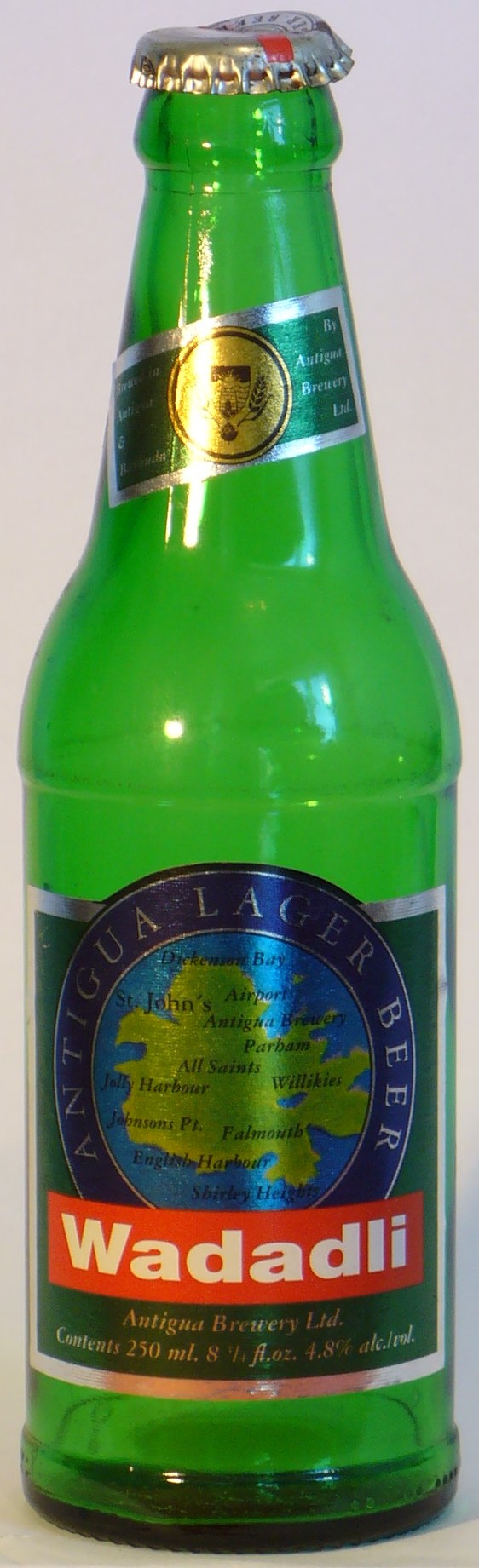
On Antiqua, you can find Wadadli brewed locally at the Antiqua Brewery, which also brews Guinness, Red Stripe and Carib under license. Wadadli doesn't get any high marks on RateBeer. The reviews on BeerAdvocate were much more complete and complimentary towards this lager. Quite a number of reviewers do also report some corn taste in it, as was the case with Banks.
A lot of these brews claim to have won appelations from the Monde Selection in Brussels. The awards from Monde Selection seem to be more about quality rather than an evaluation against BJCP standards. Kinda of like an FDA stamp of approval, but I don't profess to know what's involved in their evaluation process. Also, many of those citing a Monde Selection award don't say what level award they received - bronze or Grand Gold.
Tuesday, October 2, 2012
Wow..South Africa brewing...almost thought it was underwhelming, happy ending though.
After digging into Bulgaria's brewing industry, some strange stream of consciousness took me to South Africa. Maybe the thought of its settlement by Dutch and English led me to believe it would be a very diverse brewing scene. It seems that isn't the case. Back in 1955, the government in its infinite wisdom imposed a crushing tax on beer that put most of the brewers out of business, except for the dominant Castle Brewing (later SAB). Now SAB (now SABMiller after SAB bought Miller and owns the Miller part of the MillerCoors joint venture in the US) controls 98% of the South African market. They even control their whole supply chain - brewing hop farms, barley farms, barley malting, distribution, metal crown cap manufacturing, many retail establishments - pubs and casinos and for a while, grocery stores. They also allegedly manipulated independent distribution, but that is in the courts. Heineken is gradually breaking into the market also.
http://en.wikipedia.org/wiki/South_African_Breweries
.
There is a growing craft brew market with a lot of players coming in that are showing the same diversity of styles we are used to enjoying. More on that in a few paragraphs.
SABMiller also bought Koninklijke Grolsch N.V, so they brew Grolsch in South Africa. Among the other brews they produce are Dreher Premium Lager, Castle Lager, Castle Lite, Castle Milk Stout, Hensa, Carling Black Label, Miller Genuine Draft, Pilsner Urquell, Peroni Nastro Azzurro, Redd's, Brutal Fruit, and Sarita.
I've heard of milk stouts, but never really got around to looking into them. They include lactose (milk sugar) which can't be converted by yeast, so it imparts the degree of sweetness to the brew in proportion to the amount used. Castle Milk Stout gets really good reviews, except for several citings of a weak head.
Castle Lager gets very consistent reviews and seems a good average lager with some evidence of there being corn used in the mash.
Peroni Nastro Azzurro was originally founded in Italy and later acquired by SAB. It is a pale lager, although from the SAB site, it would be hard to know that. http://www.sab.co.za/sablimited/content/en/page53
Redd's is a line of fruit beers. Not great ratings by the people who put ratings in RateBeer, not going to say beer snobs, but people who pay enough attention to what they are drinking and contribute to the experiential body of knowledge on the drinking experience. It may be an attempt by SAB to appeal to newbie drinkers, rather than make a robust fruit ale. Sarita, on the other hand, gets much better reviews with its apple ale.
Hansa is more than a single brew, it is starting to become a line of its own. Right now it includes a Pilsner and a Marzan. The Marzan Gold gets some very mixed, but overall moderate reviews. The Pilsner scored some very high marks on RateBeer, but averaged also moderately with some great comments.
Wow - the description of Dreher Premium Lager really makes it sound amazing - triple hopped, full malt and all. The reviews on the other hand just don't back it up and most see it as pretty bland.
Homebrewing seems to be fairly popular, although just recently, given there are a couple of South African online homebrew supply shops and quite a few local shops. Mostly they distribute products from overseas, although SAB sells their grains through the stores too. There are at least three homebrew clubs: South Yeasters Homebrewers Club (Capetown), Worthog Brewers (Pretoria), and East Coast Brewers (KwaZulu-Natal). http://homebru.net/2012/05/28/homebrewing-clubs-in-south-africa/
Craft brewing is taking off and local competitions are providing good exposure to the startups. Some of the top finishers include Bierwerk, Devil's Peak Brewing, Darling Brewery and Triggerfish Brewing. Bierwerk's Aardwolf has been rated as the best craft brew in South Africa. It's made from 5 grains, molasses, coffee beans and aged in French Oak barrels. It is nonfiltered and has some sediment. The ratings on RateBeer are the highest I've run across of any brew I've looked up. It is a sweet stout, and I'm definitely adding it to my list of brews to hunt down. IPAs are making an appearance, literally. http://homebru.net/2012/01/13/suip-and-homebru-net-proudly-present-the-best-beer-on-the-table-2011-award/ says there are only a handful available, but that Devil's Peak's Blockhouse IPA, and Triggerfish's Hammerhead are off the hook. This blog on the South African scene also describes Bierwerk's Renosterbos, a barleywine that they say is spectacular. Bierwerk has a number of other brews - a weizen, another stout, a saison, and a mild ale. Their African Stout also scores extremely high.
Devil's Peak also has an imperial coffee stout, a blonde ale, a saison and an amber ale. We need to get more folks in South Africa to drinks some and put their reviews in RateBeer as they only have one review each. Triggerfish has an even bigger lineup with a dozen brews ranging from an oatmeal stout, Black Marlin (dark winter beer with 7 grains and 3 hops), many ales, blonde, pale, red, and brown, a barleywine and an imperial IPA that only has one very strong review. The homebru.net site mentions quite a number of other craft breweries and I'll be going back to that blog to check them out as well.
http://en.wikipedia.org/wiki/South_African_Breweries
.
There is a growing craft brew market with a lot of players coming in that are showing the same diversity of styles we are used to enjoying. More on that in a few paragraphs.
SABMiller also bought Koninklijke Grolsch N.V, so they brew Grolsch in South Africa. Among the other brews they produce are Dreher Premium Lager, Castle Lager, Castle Lite, Castle Milk Stout, Hensa, Carling Black Label, Miller Genuine Draft, Pilsner Urquell, Peroni Nastro Azzurro, Redd's, Brutal Fruit, and Sarita.
I've heard of milk stouts, but never really got around to looking into them. They include lactose (milk sugar) which can't be converted by yeast, so it imparts the degree of sweetness to the brew in proportion to the amount used. Castle Milk Stout gets really good reviews, except for several citings of a weak head.
Castle Lager gets very consistent reviews and seems a good average lager with some evidence of there being corn used in the mash.
Peroni Nastro Azzurro was originally founded in Italy and later acquired by SAB. It is a pale lager, although from the SAB site, it would be hard to know that. http://www.sab.co.za/sablimited/content/en/page53
Redd's is a line of fruit beers. Not great ratings by the people who put ratings in RateBeer, not going to say beer snobs, but people who pay enough attention to what they are drinking and contribute to the experiential body of knowledge on the drinking experience. It may be an attempt by SAB to appeal to newbie drinkers, rather than make a robust fruit ale. Sarita, on the other hand, gets much better reviews with its apple ale.
Hansa is more than a single brew, it is starting to become a line of its own. Right now it includes a Pilsner and a Marzan. The Marzan Gold gets some very mixed, but overall moderate reviews. The Pilsner scored some very high marks on RateBeer, but averaged also moderately with some great comments.
Wow - the description of Dreher Premium Lager really makes it sound amazing - triple hopped, full malt and all. The reviews on the other hand just don't back it up and most see it as pretty bland.
Homebrewing seems to be fairly popular, although just recently, given there are a couple of South African online homebrew supply shops and quite a few local shops. Mostly they distribute products from overseas, although SAB sells their grains through the stores too. There are at least three homebrew clubs: South Yeasters Homebrewers Club (Capetown), Worthog Brewers (Pretoria), and East Coast Brewers (KwaZulu-Natal). http://homebru.net/2012/05/28/homebrewing-clubs-in-south-africa/
Craft brewing is taking off and local competitions are providing good exposure to the startups. Some of the top finishers include Bierwerk, Devil's Peak Brewing, Darling Brewery and Triggerfish Brewing. Bierwerk's Aardwolf has been rated as the best craft brew in South Africa. It's made from 5 grains, molasses, coffee beans and aged in French Oak barrels. It is nonfiltered and has some sediment. The ratings on RateBeer are the highest I've run across of any brew I've looked up. It is a sweet stout, and I'm definitely adding it to my list of brews to hunt down. IPAs are making an appearance, literally. http://homebru.net/2012/01/13/suip-and-homebru-net-proudly-present-the-best-beer-on-the-table-2011-award/ says there are only a handful available, but that Devil's Peak's Blockhouse IPA, and Triggerfish's Hammerhead are off the hook. This blog on the South African scene also describes Bierwerk's Renosterbos, a barleywine that they say is spectacular. Bierwerk has a number of other brews - a weizen, another stout, a saison, and a mild ale. Their African Stout also scores extremely high.
Devil's Peak also has an imperial coffee stout, a blonde ale, a saison and an amber ale. We need to get more folks in South Africa to drinks some and put their reviews in RateBeer as they only have one review each. Triggerfish has an even bigger lineup with a dozen brews ranging from an oatmeal stout, Black Marlin (dark winter beer with 7 grains and 3 hops), many ales, blonde, pale, red, and brown, a barleywine and an imperial IPA that only has one very strong review. The homebru.net site mentions quite a number of other craft breweries and I'll be going back to that blog to check them out as well.
Sunday, September 30, 2012
Bulgarian Brews
Looking at my pageview stats the other day, I noticed one access from Bulgaria. I decided to see what the brewing situation was in Bulgaria, as you don't generally hear anything about it in our press or online media. I did some basic Google searching and of course ran across www.bulgarianbeer.com which provides a listing of the eleven of the thirteen breweries in the country. Most are owned by large brewing conglomerates like InBev, Heineken and Carlsberg. I checked each name, (Almus, Ariana, Abtika, Boliarka, Burgasko, Kamenitza, Ledenika, Pirinsko, Shumensko, MM Varna, and Zagorka), in RateBeer.com to see others' comments. Beer only came to Bulgaria in the mid 1800s, brought by immigrants from France, Switzerland and Austria.
The highest rating was a 58 out of 100 (within the style) and 3.06 weighted score (where the mean is 2.75) for Stolichno T’mno (Bock) from Zagorka.
Some nice comments about it, but one thing that I noticed about many of the reviews of the brews from Bulgaria, was that there was often a comment about a metallic taste. I looked for some pattern, as for Stolichno, the comment came from an Israeli drinker, so perhaps it was due to the canning and time in transit or on the shelf. Although, other reviewers in Norway and Denmark didn't report it. I then went down the list and looked up Kamenitza T’mno, a dunkel, from the oldest commercial brewery in Bulgaria. Again an Israeli finding a metallic taste, but at least this brew had a lot of reviews, many very positive. Finally scrolling through the reviews, someone from New Zealand, then some from Sweden, Ontario, CA, Finland and Wisconsin, US reporting a metallic taste. Overall the comments were very complementary, the weighted rating fairly average and one reviewer brought up the point that dark beer had only been introduced in the mid 1990s to the Bulgarian brewing scene. Having just lagered a dunkel over the summer, I can sympathize with the brewers' difficulties with it.
Next I checked Pirinsko Svetlo Pivo, a pilsner from the Pirinsko brewery owned by Carlsberg. Again, Israeli and Finnish reviewers reported metallic tastes. I checked back to see if they were the same reviewers as before. Neither the Israeli or Finnish reviewers were the same as reported the metal in the Kamenitza.
If Kamentiza was delivered in a bottle as shown on Ratebeer, then the metallic taste isn't from the canning. However on the Bulgarian Beer site, it shows both bottles and cans, so who knows how the reviewers received the product. Back to the reviews. Aha - the reviewer from Wisconsin got the brew in the bottle, as did the reviewer in Finland.
Next I Googled "water quality in bulgaria" and reached the site http://www.aquamedia.at/templates/index.cfm/id/20679 which has a very detailed analysis of the water in Bulgaria from 2007. Phew, the analysis certainly seemed like the water itself could be at fault - some parts of the country have natural lead, chromium, manganese, nitrates (which have a twangy taste), and iron. The water treatment systems in the country don't remove these metals, so I imagine in many cases they end up in the beer, unless the brewery specifically treats the water.
It would be interesting to see if the water is treated at the breweries, given the sizable backing most of the breweries have. I don't think this would be enough for me to not sample Bulgarian brews, given the chance and the many positive reviews I've seen. Perhaps the viewer from Bulgaria will fill us in on the breweries' filtration systems.

The highest rating was a 58 out of 100 (within the style) and 3.06 weighted score (where the mean is 2.75) for Stolichno T’mno (Bock) from Zagorka.
Some nice comments about it, but one thing that I noticed about many of the reviews of the brews from Bulgaria, was that there was often a comment about a metallic taste. I looked for some pattern, as for Stolichno, the comment came from an Israeli drinker, so perhaps it was due to the canning and time in transit or on the shelf. Although, other reviewers in Norway and Denmark didn't report it. I then went down the list and looked up Kamenitza T’mno, a dunkel, from the oldest commercial brewery in Bulgaria. Again an Israeli finding a metallic taste, but at least this brew had a lot of reviews, many very positive. Finally scrolling through the reviews, someone from New Zealand, then some from Sweden, Ontario, CA, Finland and Wisconsin, US reporting a metallic taste. Overall the comments were very complementary, the weighted rating fairly average and one reviewer brought up the point that dark beer had only been introduced in the mid 1990s to the Bulgarian brewing scene. Having just lagered a dunkel over the summer, I can sympathize with the brewers' difficulties with it.Next I checked Pirinsko Svetlo Pivo, a pilsner from the Pirinsko brewery owned by Carlsberg. Again, Israeli and Finnish reviewers reported metallic tastes. I checked back to see if they were the same reviewers as before. Neither the Israeli or Finnish reviewers were the same as reported the metal in the Kamenitza.
If Kamentiza was delivered in a bottle as shown on Ratebeer, then the metallic taste isn't from the canning. However on the Bulgarian Beer site, it shows both bottles and cans, so who knows how the reviewers received the product. Back to the reviews. Aha - the reviewer from Wisconsin got the brew in the bottle, as did the reviewer in Finland.
Next I Googled "water quality in bulgaria" and reached the site http://www.aquamedia.at/templates/index.cfm/id/20679 which has a very detailed analysis of the water in Bulgaria from 2007. Phew, the analysis certainly seemed like the water itself could be at fault - some parts of the country have natural lead, chromium, manganese, nitrates (which have a twangy taste), and iron. The water treatment systems in the country don't remove these metals, so I imagine in many cases they end up in the beer, unless the brewery specifically treats the water.
It would be interesting to see if the water is treated at the breweries, given the sizable backing most of the breweries have. I don't think this would be enough for me to not sample Bulgarian brews, given the chance and the many positive reviews I've seen. Perhaps the viewer from Bulgaria will fill us in on the breweries' filtration systems.
Friday, September 28, 2012
Brew 12 - Belgian Wit..sort of
My son is a big fan of Blue Moon's Belgian White Ale, although sometimes he'll grab a Shock Top. some folks are quick to point out..."YOU KNOW ITS MADE BY MILLER/COORS?"
Yeah, we do, and you know those guys have been making beer a long time and their brewers maybe hamstrung by the guys in the marketing department, but they do know their stuff. Blue Moon is actually a separate craft beer division a couple layers removed from the mass produced Coors and Miller Genuine Draft divisions. They have their own brewery, brewmasters, etc. and have come up with some really good brews - red ale, pumpkin ale. farmhouse ale, various wheat ales and an abbey.
So since my Saison is almost gone already, the next brew on my list was a Belgian Wit, to see if I could make something my son would like. I wasn't trying to exactly duplicate Blue Moon, but wouldn't complain if I did. Should have looked deeper before starting, since I didn't realize they use oats in the brewing too. I found a Belgian Wit on beersmith.org from some brewer named Brad. I found several others and combined the recipes and altered the ingredients a bit to use up some of the stuff I had on hand. Well, a little more than a bit.
I had a bunch of small batches of hops laying around - .2 ounces of this, .4 ounces of that. Remember I only brew 2 gallon batches, so I end up with lots of odds and ends, half packets of dry yeast, half bags of specialty grains, etc. I did some comparisons on the hops and substituted my .3 oz of Hallertau US hops for Saaz to use as the aroma hops.
I picked up a regular naval orange and zested it; probably some other orange you're supposed to use. I used SafeBrew WB-06 yeast instead of WLP400. I did have enough Kent Goldings on hand, pale ale malted barley, some light crystal malt and some flaked wheat. I still needed a little higher SG so I found half pound of honey. Okay, so we are way off from Blue Moon I suspect, but there should be enough wheat - 1.6 lbs - to make it taste like a wheat beer.
Went through the normal process, sanitizing, heating up the mash.

Found out an interesting tidbit from a plumber that came by to flush my water heater. He said that the resin based water treatment system I have only removes chlorine and particulate, so my water still should have enough carbonate and magnesium for brewing. That's not what the water treatment guy said, but I'm sure he's just giving me the company line so I don't freak out that there's still calcium in my water.
While the mash was cooking, I took the coriander in a zip lock bag out to the garage and crushed it with a hammer. Tough little buggers. Have to do the same with Chocolate malt when I use it - can never seem to get it to go through the mill at the homebrew store. Almost seems oily.
Kept the mash at 155 instead of the multiple steps I usually do. Didn't seem to matter, did an iodine test after 60 minutes and it was fully converted. So started sparging with a grain bag in the fermenting bucket to avoid having to rack the wort:
Then on to the boil for 60 minutes with the Kent Goldings going in as soon as the boiling started.
Yeah, we do, and you know those guys have been making beer a long time and their brewers maybe hamstrung by the guys in the marketing department, but they do know their stuff. Blue Moon is actually a separate craft beer division a couple layers removed from the mass produced Coors and Miller Genuine Draft divisions. They have their own brewery, brewmasters, etc. and have come up with some really good brews - red ale, pumpkin ale. farmhouse ale, various wheat ales and an abbey.
So since my Saison is almost gone already, the next brew on my list was a Belgian Wit, to see if I could make something my son would like. I wasn't trying to exactly duplicate Blue Moon, but wouldn't complain if I did. Should have looked deeper before starting, since I didn't realize they use oats in the brewing too. I found a Belgian Wit on beersmith.org from some brewer named Brad. I found several others and combined the recipes and altered the ingredients a bit to use up some of the stuff I had on hand. Well, a little more than a bit.
I had a bunch of small batches of hops laying around - .2 ounces of this, .4 ounces of that. Remember I only brew 2 gallon batches, so I end up with lots of odds and ends, half packets of dry yeast, half bags of specialty grains, etc. I did some comparisons on the hops and substituted my .3 oz of Hallertau US hops for Saaz to use as the aroma hops.
I picked up a regular naval orange and zested it; probably some other orange you're supposed to use. I used SafeBrew WB-06 yeast instead of WLP400. I did have enough Kent Goldings on hand, pale ale malted barley, some light crystal malt and some flaked wheat. I still needed a little higher SG so I found half pound of honey. Okay, so we are way off from Blue Moon I suspect, but there should be enough wheat - 1.6 lbs - to make it taste like a wheat beer.
Went through the normal process, sanitizing, heating up the mash.

Found out an interesting tidbit from a plumber that came by to flush my water heater. He said that the resin based water treatment system I have only removes chlorine and particulate, so my water still should have enough carbonate and magnesium for brewing. That's not what the water treatment guy said, but I'm sure he's just giving me the company line so I don't freak out that there's still calcium in my water.
While the mash was cooking, I took the coriander in a zip lock bag out to the garage and crushed it with a hammer. Tough little buggers. Have to do the same with Chocolate malt when I use it - can never seem to get it to go through the mill at the homebrew store. Almost seems oily.
Kept the mash at 155 instead of the multiple steps I usually do. Didn't seem to matter, did an iodine test after 60 minutes and it was fully converted. So started sparging with a grain bag in the fermenting bucket to avoid having to rack the wort:
Then on to the boil for 60 minutes with the Kent Goldings going in as soon as the boiling started.
Turned off the heat after the 60 minutes and threw in the Hallertau hops, coriander and orange peel and let those sit for 5 minutes while I filled up a cooler outside and the sink with cold water. This is the part I really dislike, trying to cool this stuff down. Fortunately the weather has gotten cooler at night and the water in the cooler really helped bring it down relatively quickly, with the help of a few ice packs. I used the grain bag again to sift out the hops, seeds and peels. I also poured the wort back into the fermenter and kettle a few times to oxygenate it, plus let it splatter pretty well into the glass jugs. I had started the hydrating the yeast with some of the wort during the boil, so it was good and ready by now.
Here's all the jugs, hoses and towels ready in the cooler to start fermenting. Twice a day I soak the towels in cool water to keep the jugs at 70 degrees. The starting gravity came out to 1.055, which is about what I was targeting.
We'll see in a month what I end up with. Should be fairly drinkable.
Subscribe to:
Posts (Atom)


